
Professional Power Flushing, Central Heating Cleaning & Water Treatment Across East Devon
SAFEXE LTD Gas, Plumbing & Heat Pumps
SAFEXE LTD Gas, Plumbing & Heat Pumps provides professional power flushing, central heating system cleaning, radiator sludge removal, heating water treatment, magnetic filter cleaning, inhibitor testing, heating system fault diagnosis, boiler protection, and heat pump water quality advice across East Devon.
Dirty heating system water can cause poor heating performance, cold radiators, noisy boilers, blocked filters, pump issues, sticking valves, poor circulation, repeated faults, and premature component failure.
A boiler, heat pump, radiator system, or heating upgrade will only perform properly if the heating water is clean, protected, and suitable for the equipment installed.
Whether you have cold spots on radiators, poor circulation, dirty water, repeated boiler faults, blocked filters, noisy heating, or a new boiler or heat pump installation planned, SAFEXE LTD can assess the system and advise whether power flushing, chemical cleaning, water treatment, or another repair route is most suitable.
Professional Power Flushing
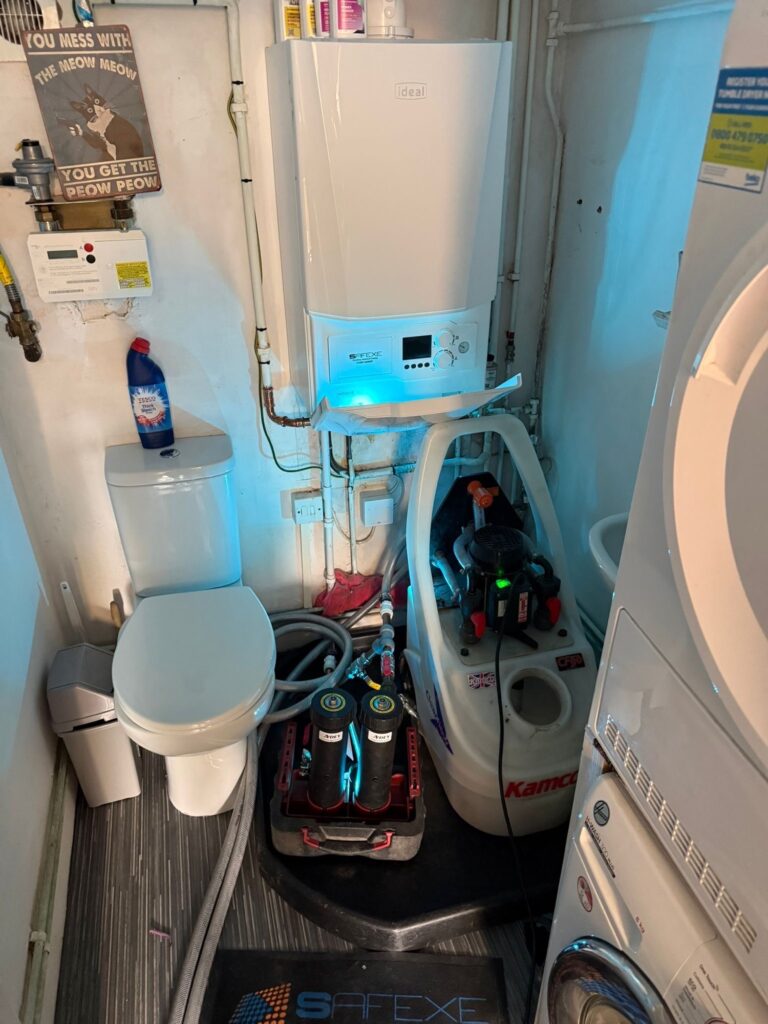
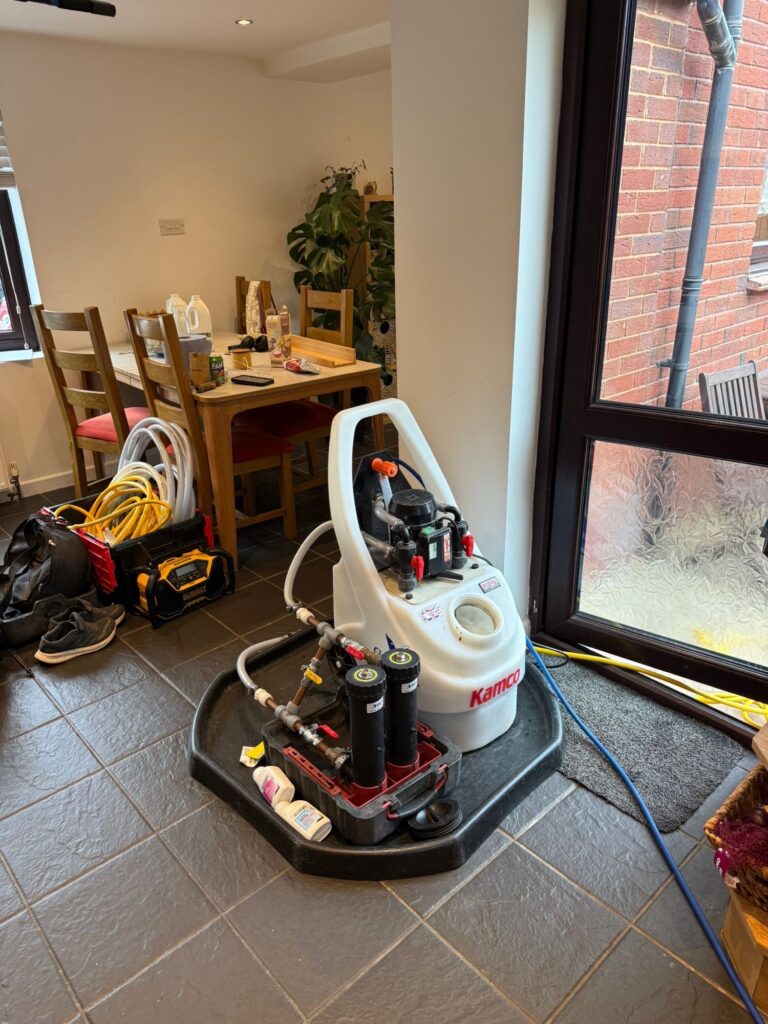
Power flushing is a heating system cleaning process designed to remove sludge, debris, corrosion deposits, and dirty water from central heating systems.
A power flush may be recommended where the heating system is showing signs of contamination, corrosion, or poor circulation.
Power flushing can help improve:
- Radiator performance
- Heating circulation
- Boiler protection
- Heat pump protection
- System water quality
- Heating efficiency
- Heat-up times
- System reliability
- Long-term component protection
Power flushing is not always required, but where the system is dirty, it can be an important part of protecting the boiler, heat pump, pumps, valves, and radiators.
Heating System Cleaning
Heating system cleaning can involve different approaches depending on the condition of the system.
This may include:
- Power flushing
- Chemical cleaning
- Magnetic filter cleaning
- Dosing with inhibitor
- System water testing
- Targeted radiator cleaning
- System balancing
- Checking flow and circulation
- Checking for blocked filters
- Checking for signs of corrosion
- Advising on further repair work where needed
The correct method depends on the age of the heating system, pipework condition, radiator condition, boiler or heat pump type, contamination level, and customer requirements.
Signs Your Heating System May Need Cleaning
A power flush or heating system clean may be worth considering if you notice:
- Cold spots on radiators
- Radiators slow to heat
- Some radiators not heating properly
- Black or dirty water when bleeding radiators
- Noisy boiler operation
- Noisy pump operation
- Blocked magnetic filters
- Repeated boiler faults
- Poor circulation
- Boiler overheating
- Radiator valves sticking
- Dirty water in the system
- Pump or heat exchanger issues
- Poor heating performance after a boiler replacement
- Heating system pressure or circulation problems
- Manufacturer warranty concerns
A proper assessment is important before deciding whether a full power flush, chemical clean, filter clean, or water treatment is the best option.
Radiator Cold Spots
Cold spots on radiators are a common sign of sludge or debris inside the heating system.
Radiators may be:
- Cold at the bottom
- Warm at the top but cold lower down
- Slow to heat
- Only partly heating
- Noisy when heating
- Affected differently in different rooms
Sludge can prevent hot water from circulating properly through the radiator.
However, radiator problems can also be caused by trapped air, faulty valves, poor balancing, pump problems, pipework restrictions, or wider system issues.
We can advise whether the cause is likely to be sludge, poor circulation, a valve issue, or another heating fault.
Power Flushing with Boiler Installation
Power flushing or system cleaning is often highly recommended when installing a new boiler, especially if the existing heating system is old, dirty, or poorly maintained.
A new boiler should not be connected to a dirty heating system without proper consideration.
Dirty system water can affect:
- Boiler efficiency
- Heat exchanger performance
- Pump lifespan
- Radiator performance
- Heating circulation
- Component reliability
- Manufacturer warranty requirements
- Long-term system reliability
Where required, we may recommend a full power flush or suitable system cleaning process as part of a boiler replacement.
This helps protect the new boiler and gives the heating system the best chance of performing properly.
Power Flushing & Boiler Warranty Protection
Many boiler manufacturers expect the heating system to be clean, protected, and correctly treated when a new boiler is installed.
Poor system water can contribute to:
- Blocked heat exchangers
- Blocked filters
- Pump faults
- Noisy operation
- Poor circulation
- Reduced efficiency
- Component damage
- Repeat breakdowns
If the system is dirty and not cleaned or protected properly, it may affect performance and could cause issues with manufacturer warranty conditions.
This is why water quality should be considered properly during boiler installation, boiler servicing, and heating system repair work.
Heating System Cleaning for Heat Pumps
Heat pumps need good flow rates and clean system water to perform properly.
Dirty water, blocked filters, poor circulation, or contaminated pipework can lead to:
- Low flow faults
- Poor heating performance
- Higher running costs
- Noisy operation
- Blocked strainers
- System lockouts
- Reduced efficiency
- Component strain
- Poor hot water performance
- Flow temperature issues
Where a heat pump is being installed, serviced, or diagnosed, heating water quality should be checked carefully.
A dirty heating system can make a good heat pump look like it is performing badly, when the real issue is poor flow, sludge, restriction, or contamination in the heating circuit.
Magnetic Filters & Dirt Separators
Magnetic filters and dirt separators help protect boilers, heat pumps, pumps, valves, and heating systems by collecting debris from the circulating water.
However, a magnetic filter does not clean the entire system on its own.
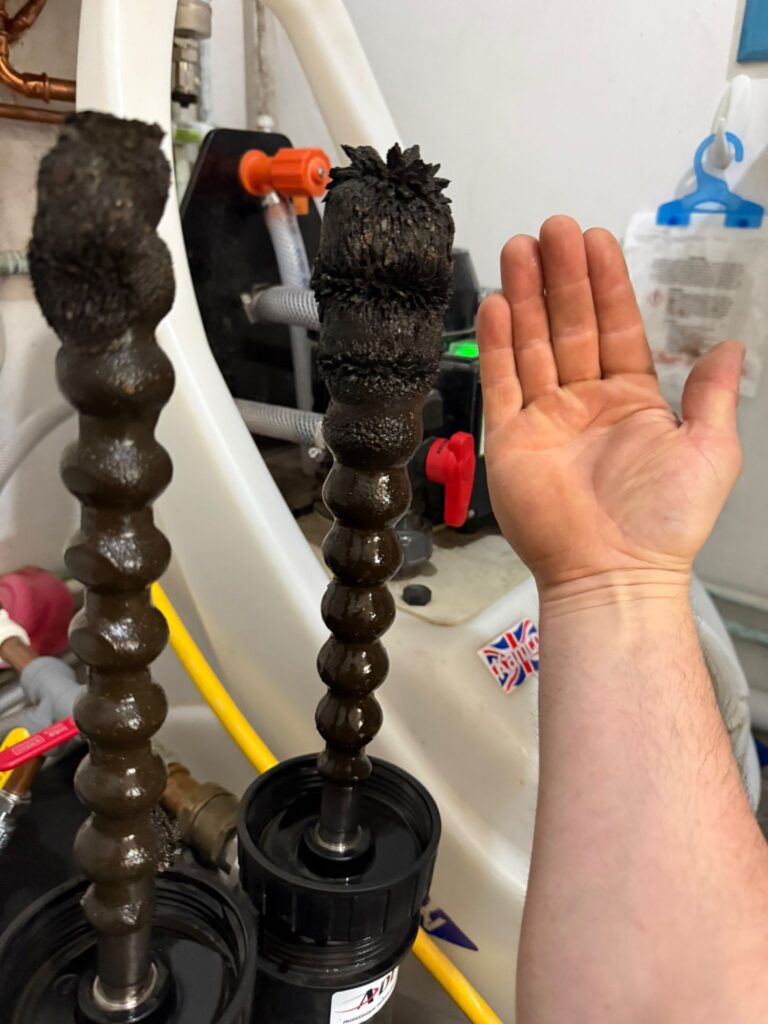
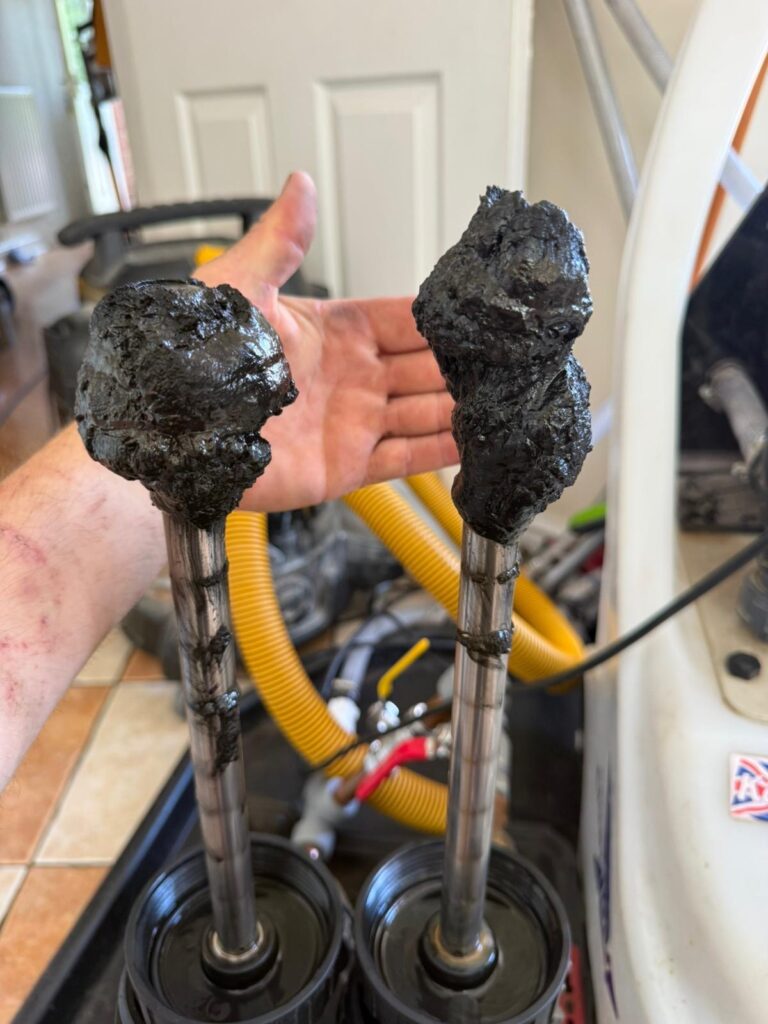
A heavily contaminated magnetic filter may indicate:
- Dirty system water
- Corrosion inside the heating system
- Poor inhibitor levels
- Sludge build-up
- Lack of previous maintenance
- Poor system protection
- Possible need for further cleaning
Cleaning the magnetic filter is useful, but if the system is heavily contaminated, further cleaning or water treatment may be required.
Central Heating Inhibitor
Central heating inhibitor helps protect the heating system against corrosion.
Without correct protection, heating water can become contaminated over time.
Poor or missing inhibitor can contribute to:
- Sludge
- Corrosion
- Blocked filters
- Poor circulation
- Radiator cold spots
- Noisy operation
- Component failure
- Reduced efficiency
- Repeated boiler or heating faults
Where required, we can advise on inhibitor testing, inhibitor top-up, system cleaning, and long-term water quality protection.
Heating Water Quality Testing
Water quality is important for both boilers and heat pumps.
Heating water quality checks can help identify whether the system may be suffering from corrosion, contamination, poor protection, or dirty water.
Poor water quality may show as:
- Black water
- Brown water
- Magnetite sludge
- Blocked magnetic filters
- Cold radiators
- Poor heating circulation
- Repeated component failures
- Noisy boiler or pump operation
- Low flow heat pump faults
- Poor system performance
Where needed, we can advise on the most suitable cleaning, flushing, or protection method.
Power Flushing for Radiator Problems
Radiator problems are one of the most common reasons customers ask about power flushing.
A power flush or heating system clean may help where radiators suffer from:
- Cold bottoms
- Cold spots
- Slow heat-up
- Poor circulation
- Black water
- Air and corrosion issues
- Uneven heating
- Poor performance after radiator replacement
- Heating systems that have not been maintained properly
Sometimes the issue is sludge. Sometimes the issue is poor balancing, faulty valves, pipework restrictions, pump issues, or system design.
We can advise on the likely cause before recommending unnecessary work.
Power Flushing vs Chemical Cleaning
Not every heating system needs a full power flush.
Depending on the system condition, alternatives may include:
- Chemical cleaning
- Magnetic filter cleaning
- Inhibitor testing
- System dosing
- Targeted radiator work
- Balancing
- Component repair
- Partial system cleaning
- Further diagnosis
The right approach depends on the age, condition, contamination level, pipework, boiler, radiators, heating performance, and customer goals.
When Power Flushing May Not Be Suitable
Power flushing is not suitable for every system.
Care must be taken with:
- Very old pipework
- Fragile radiators
- Known leaks
- Weak or corroded components
- Poorly installed systems
- Systems with existing pressure issues
- Systems where pipework condition is unknown
- Systems already suffering from hidden leaks
- Poorly supported pipework
- Old valves and fittings
If there are concerns, we will advise honestly before recommending a full power flush.
Sometimes a gentler clean, partial repair, radiator replacement, or wider heating upgrade may be more sensible.
Power Flushing for Older Properties
Older properties across East Devon often have heating systems that have been altered over many years.
Common issues can include:
- Old radiators
- Mixed pipework
- Microbore pipework
- Old valves
- Poor previous alterations
- Poor circulation
- Dirty heating water
- Hidden pipework
- Cold rooms
- Repeated boiler pressure issues
- Poor access under floors
- Old pumps and controls
Older systems need sensible assessment before cleaning work is carried out.
The aim is to improve heating performance without creating unnecessary risk.
Power Flushing for Renovated Homes
Renovated homes often have heating systems that combine old and new pipework, radiators, boilers, cylinders, underfloor heating, or controls.
Heating system cleaning may be useful where renovation work has involved:
- New boiler installation
- Radiator replacement
- New extensions
- Pipework alterations
- Underfloor heating additions
- Cylinder upgrades
- Heating zone changes
- Old radiators retained
- New controls fitted to an old system
- Future heat pump planning
If the original heating system is dirty, new components can be affected by old debris and corrosion deposits.
Power Flushing for Landlords
Landlords may need heating system cleaning where rental properties suffer from poor radiator performance, repeated boiler issues, or tenant heating complaints.
Power flushing or system cleaning may help reduce:
- Cold radiator complaints
- Poor heating performance
- Repeated boiler call-outs
- Blocked magnetic filters
- System circulation problems
- Noisy heating systems
- Tenant reports of uneven heating
For rental properties, reliable heating is important for tenant comfort and property management.
We can advise whether cleaning, balancing, repair, or replacement is the best route.
Power Flushing, Boiler Servicing & Heating Maintenance
Power flushing connects closely with boiler servicing and heating maintenance.
During servicing or repair work, signs of poor water quality may become obvious.
These signs may include:
- Dirty magnetic filters
- Noisy boilers
- Poor circulation
- Repeated component faults
- Radiators with cold spots
- Black water in the system
- Blocked strainers
- Poor system pressure behaviour
- Noisy pumps
Where poor water quality is found, we can advise whether the system needs cleaning, inhibitor, further testing, or repair work.
Power Flushing & Heating System Upgrades
Heating system upgrades often involve improving the condition of the existing system.
Where radiators, boilers, pipework, controls, or hot water systems are being upgraded, water quality should also be considered.
A heating system upgrade may include:
- Radiator upgrades
- Power flushing
- System cleaning
- Magnetic filter installation
- Thermostatic radiator valves
- Heating balancing
- Pipework improvements
- Water quality treatment
- Smart controls
- Boiler or heat pump preparation
A clean, balanced, protected heating system is more likely to perform properly long term.
Power Flushing & Heat Pump Preparation
If a property is being prepared for a future heat pump, water quality and system flow are important.
Heat pumps depend on good circulation and low resistance through the system.
Before or during heat pump planning, we may advise on:
- Radiator sizing
- Pipework suitability
- System flow rates
- Filter condition
- Dirty water
- System flushing
- Inhibitor or glycol requirements
- Heating system balancing
- Cylinder suitability
- Low-temperature heating design
A dirty or restricted system can cause poor heat pump performance and should be addressed properly.
Boiler Replacement & Dirty Heating Systems
If a boiler is being replaced because of repeated faults, poor circulation, overheating, or blocked components, the heating system should be checked carefully.
A new boiler may not solve the underlying problem if the real issue is:
- Sludge
- Blocked radiators
- Poor circulation
- Dirty pipework
- Poor water treatment
- Sticking valves
- Blocked magnetic filters
- Poor balancing
- Old system contamination
This is why a heating system clean may be recommended before or during a boiler replacement.
Areas We Cover
SAFEXE LTD Gas, Plumbing & Heat Pumps provides power flushing, heating system cleaning, and water treatment advice across East Devon, including:
- Exmouth
- Exeter
- Topsham
- Sidmouth
- Budleigh Salterton
- Lympstone
- Woodbury
- Exminster
- Pinhoe
- Exton
- Ebford
- East Budleigh
- Otterton
- Newton Poppleford
- Ottery St Mary
- West Hill
- Honiton
We focus on areas within our normal working radius from Exmouth so we can provide a reliable, realistic, and local service.
Why Choose SAFEXE LTD for Power Flushing?
- Professional local company covering East Devon
- Experienced in boilers, heating systems, heat pumps, plumbing, and radiators
- Power flushing and system cleaning advice
- Water quality and inhibitor advice
- Magnetic filter cleaning and system protection
- Heating fault diagnosis available
- Boiler installation and servicing knowledge
- Heat pump system knowledge
- Clear advice on whether power flushing is actually required
- Practical long-term heating system recommendations
- Honest repair versus upgrade advice
We focus on protecting the heating system and improving long-term performance rather than recommending unnecessary work.
Book a Power Flushing or Heating System Cleaning Assessment
If your heating system has cold radiators, dirty water, poor circulation, noisy operation, repeated boiler problems, or you are planning a new boiler or heat pump installation, contact SAFEXE LTD Gas, Plumbing & Heat Pumps today.
We can assess the system and advise whether power flushing, chemical cleaning, water treatment, heating balancing, or another repair route is most suitable.
FAQs
Do you offer power flushing?
Yes. SAFEXE LTD provides power flushing and heating system cleaning advice across East Devon where a system is dirty, sludged, or suffering from poor circulation.
How do I know if I need a power flush?
Signs may include cold spots on radiators, dirty water, noisy boiler operation, poor circulation, blocked filters, repeated boiler faults, or radiators that are slow to heat.
Do I need a power flush with a new boiler?
A power flush or system clean may be highly recommended if the existing heating system is dirty, old, or has poor water quality. Poor system water can affect performance and may impact warranty conditions.
Can dirty heating water damage a boiler?
Yes. Dirty or poorly treated heating system water can cause blocked filters, poor circulation, heat exchanger problems, pump issues, noisy operation, and premature component failure.
Is power flushing always needed?
No. Some systems may only need chemical cleaning, filter cleaning, inhibitor, balancing, or targeted repairs. The system should be assessed before recommending a full power flush.
Can power flushing help cold radiators?
Yes, where cold radiators are caused by sludge, debris, or poor circulation. However, radiator issues can also be caused by valves, balancing, pipework, or pump problems.
Do heat pumps need clean system water?
Yes. Heat pumps need good flow rates and clean system water to operate properly. Dirty water can cause low flow issues, blocked filters, poor performance, and higher running costs.
Can you clean a magnetic filter?
Yes. Magnetic filter cleaning may be carried out as part of suitable heating maintenance or servicing, depending on the system and access.
Can power flushing fix all heating problems?
No. Power flushing can help where poor water quality or sludge is the issue, but heating problems can also be caused by pumps, valves, pipework, controls, poor balancing, or system design.
Do you cover Exeter, Exmouth, Sidmouth and Topsham?
Yes. SAFEXE LTD provides power flushing and heating system cleaning advice across East Devon, including Exmouth, Exeter, Sidmouth, Topsham and nearby areas within our normal working radius.