
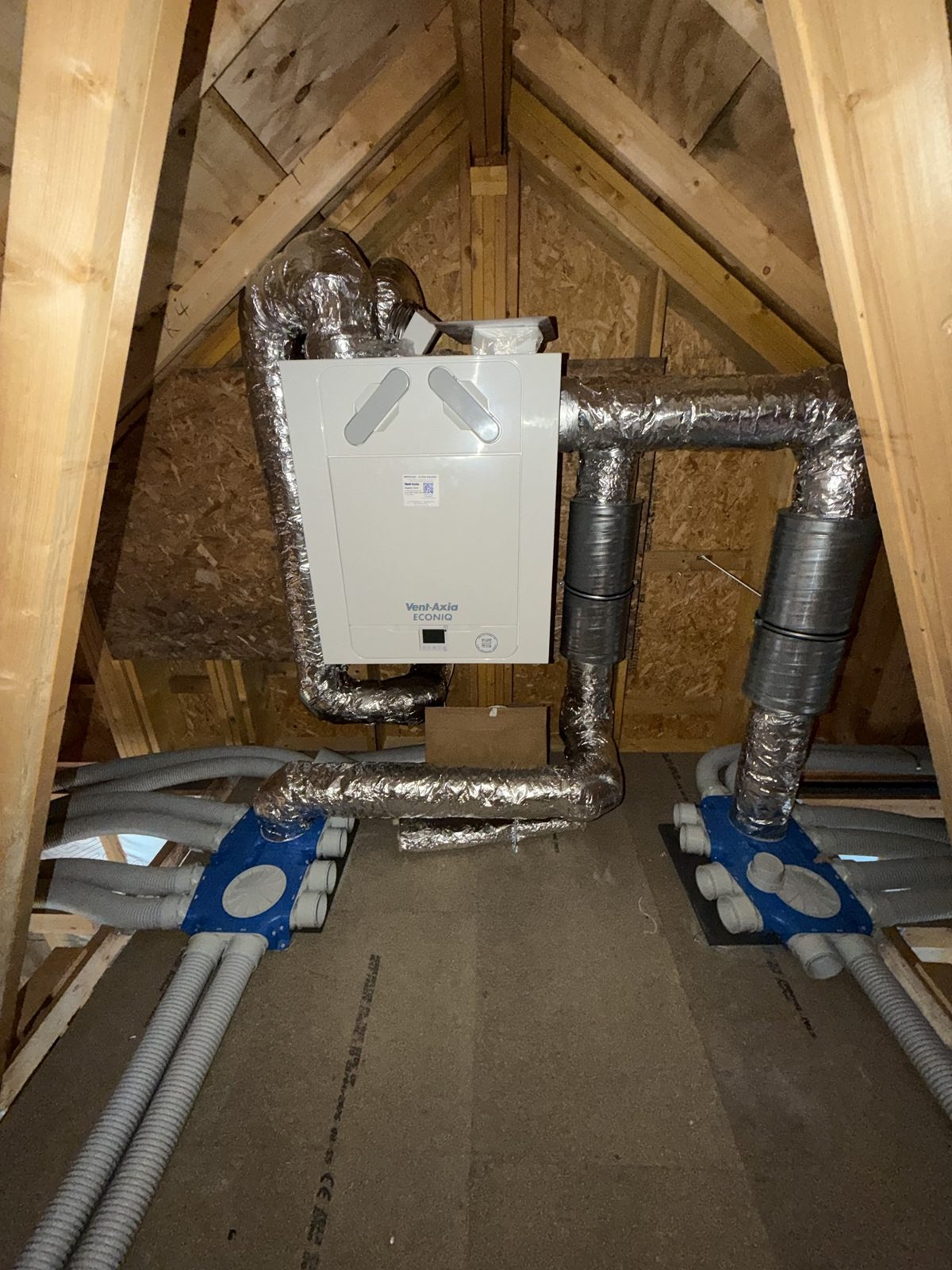
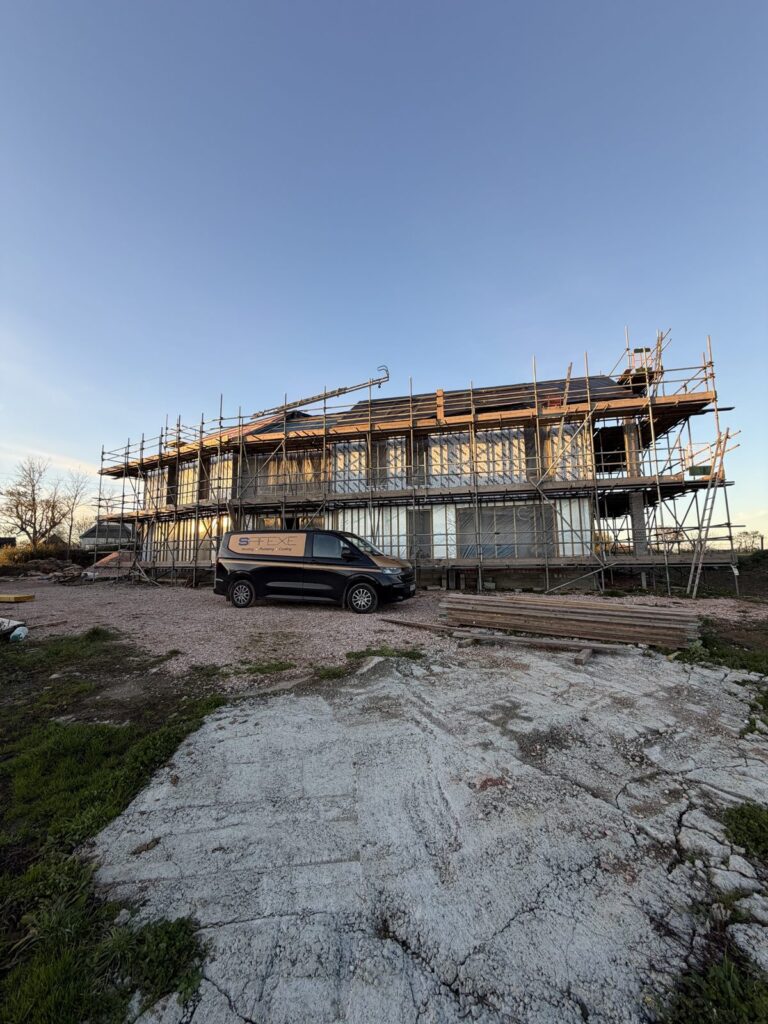
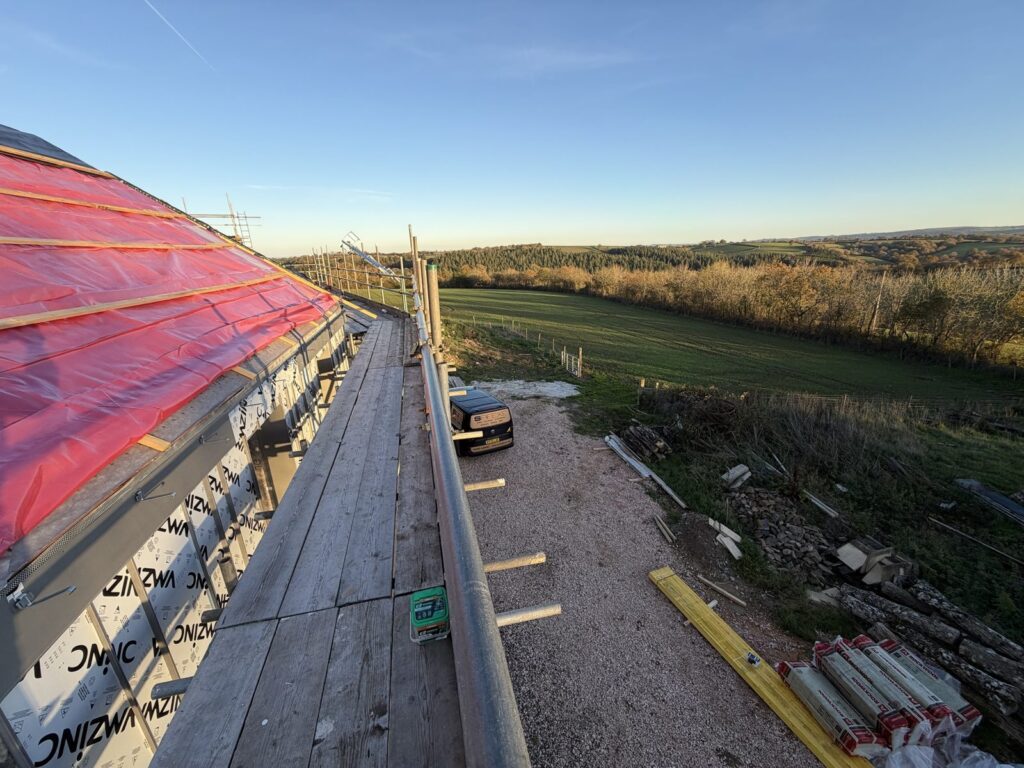
This is a timber-frame self-build in the countryside near Exeter, and a lovely house to be working on. We’re fitting whole-house ventilation (MVHR) and air conditioning, and this month the team have been on the first fix: everything that goes in before the plasterboard and is never seen again.
The MVHR system
The heart of it is a Vent-Axia Econiq MVHR unit in the loft. It pulls stale, damp air out of the kitchen and bathrooms, passes it through a heat exchanger, and uses that heat to warm the fresh air going back into the bedrooms and living spaces. In a well-insulated, airtight new build like this, that’s what keeps the air fresh without opening windows and throwing the heat away.
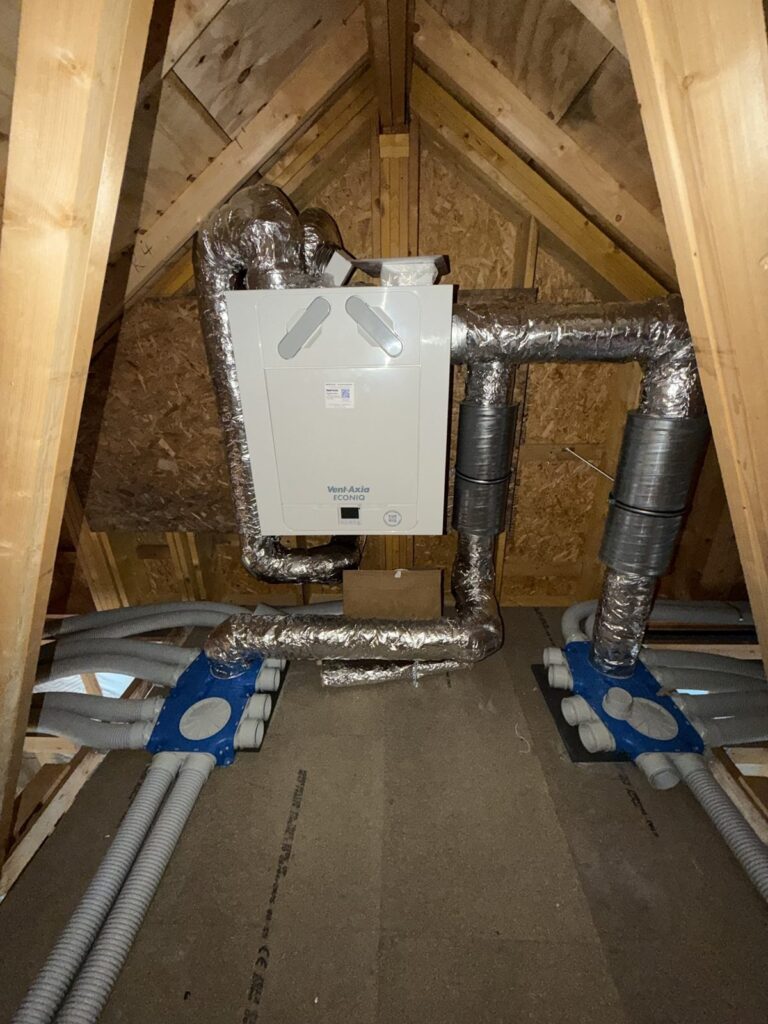
The large ducts to and from outside are fully insulated, so warm air doesn’t condense inside them in a cold loft. From the unit, the air goes to two radial plenums (the blue boxes), and each room gets its own run of semi-rigid duct back to the plenum. Radial ducting keeps each run simple, makes the system easier to balance at commissioning, and keeps noise from travelling between rooms.
Getting the first fix right
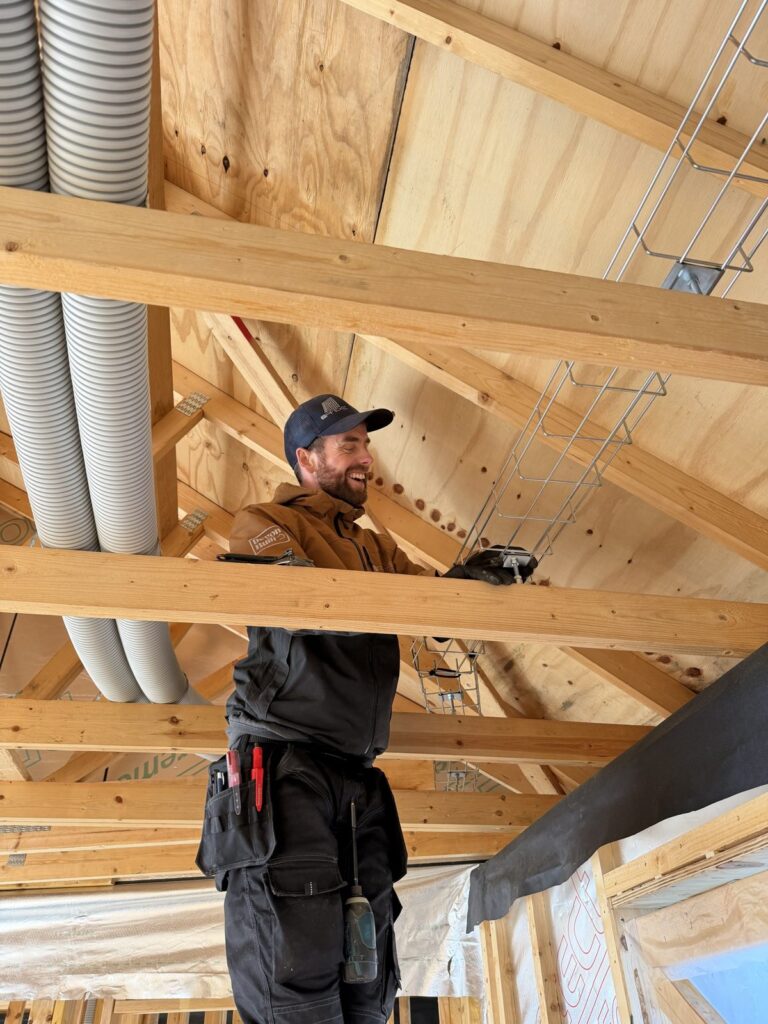
First fix is where a system is made or broken. Duct runs need to be as short and straight as the build allows, kept clear of the other trades’ routes, and fixed so nothing gets crushed once the ceilings go up. The air conditioning pipe routes are planned in at the same stage, so the indoor units end up exactly where they should be, with nothing visible on the walls when the house is finished.
Working on a self-build from the start means the ventilation and air con are designed in, not squeezed in afterwards. It’s the best way to do it, and it shows in the finished house.
What’s next
Once the plasterboard is up, we’ll come back for second fix: fitting the room valves, setting up the air conditioning, then balancing and commissioning the MVHR so every room gets the right airflow. We’ll post an update when it’s done.
Planning a self-build or renovation near Exeter? Find out more about our MVHR and ventilation and air conditioning, or see the other work we’ve done in and around Exeter. Getting us involved early, before first fix, is what makes the biggest difference.